

Why mental training matters for recreational skiers
We have all heard about the importance of mental training in professional sports. In every other interview with a successful athlete, you hear how they credit part of their success to working on the mental side of their sport.
It is obvious that it must be crucial for the professional in the competition scenario, but why should it be important for the recreational athlete? Why should it matter for the skier that just wants to ski a little better?
In this article and video, I will give you some ideas and recommendations for your mental pre-season preparation. Everything in this article is based on my own experience working with skiers of all levels.
“It is really hard to improve when you only ski 7 to 10 days a year. It always feels a little like having to start over again.”
I have heard this line many times. Those who know me know that I don’t like excuses, and I have to admit, I am not a big fan of this statement, as it seems to be a bit of an excuse.
I would agree with it if we did not think about skiing at all between ski holidays. If we completely forgot about it until the next time we clicked into our skis. But that is usually not what happens.
Every time we dream of making turns, every time we think about how it would feel to ski a certain slope, we are actually doing some kind of mental training.
We all know that by doing something over and over in our head we can get better at it.
But the key question is HOW are we doing it in our head and WHAT turns we are dreaming about.
Are we thinking the right turns or do we fall back to old habits?
Are we visualizing the moves we have been working on or do we see ourselves with the hip on the snow copying the show skiers we get brainwashed with on Instagram?
This is where your videos and your training diary come into play.
Start with a realistic image of your own skiing
Having a realistic image of your own skiing is the first step to making the mental turns more effective. The closer your dreamt turns are to reality, the easier it is to remind yourself of the things that actually help you and how it feels when it works.
Have a look at some of your runs from the training and the analysis or summary clip and then visualize some good turns. Falling asleep every night dreaming of Marcel Hirscher won’t make you a better skier. But watching yourself ski slightly better turns will.
Here are some practical tips for your mental turns:
- Start on an easy run.
- Look for rhythm and flow.
- Remind yourself of your main focus.
- Remind yourself of your bad habit.
- Do one run doing your favourite drill
- Increase the speed and do the best run ever
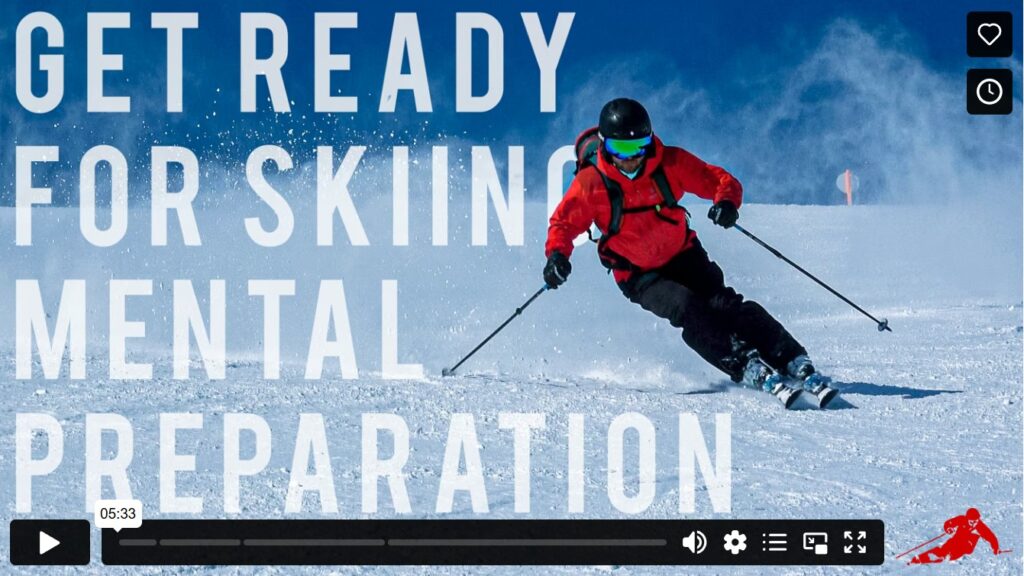
Video available in the member area
Do not only remember the good turns
I believe that we should also remind ourselves of the not-so-great moments. This can be beneficial, as long as we understand why they were not so great and what we want to replace them with.
Remind yourself of your weakness. What did it look like in the ski analysis? Which one is your weaker turn and why? See yourself doing it wrong and then consciously do it better. How does it feel when you fall back into the old habit and how does it feel when you do it right? What are my checkpoints? How can I check myself and know if I am doing it right?
What is my main focus and how can it help me improve my weaknesses?
Relax!
In the end, relax, drop your arms, and just let the skis run.
One of my favourite moments watching a ski racer train was during Marcel Hirscher’s last season, when he was training at Treble Cone. They had a GS course set in the first half of the slope, and in the second half, they would do drills on the public run. It was amazing to watch with how much discipline all the athletes did their basic drills until the very bottom of the run.
One time Marcel finished his run and got to the top of Main Street 5, the last steep pitch of the run called Main Street, which faces directly towards the lake and the stunning view. Marcel stopped and had a look at the view, and I was wondering which drill he would now do. But instead of doing a drill, he dropped his hands, spread his arms out, and straight-lined the whole thing from top to bottom.
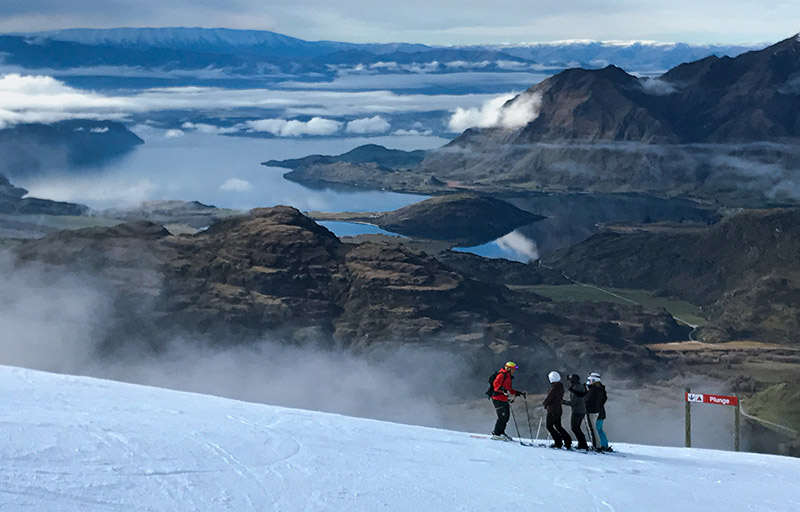
Great skiing is always relaxed, we want to breathe and feel the flow. Often when we try to do something differently, we tense up and do the opposite. So in your mental runs, remember to enjoy it and to feel the flow, maybe while still controlling the speed and finishing your turns, rather than straight-lining. 😉
For some of you fear is a factor. It might be the shaky moments when you feel a pain signal from an old injury, or the nervousness when you get into a situation that you used to struggle with.
Hopefully, you also had some moments where you did better. Moments where you could trust your leg again, or where you could focus on the technique and it worked. Remember those moments, and also remember the key focus points that helped you.
Skiers who watch their training diaries improve more
To be able to do all this we need to watch our own ski videos. We need to face the feedback in the analysis videos. The things we did not like are not going to disappear just because we pretend they are not there.
Have a realistic view of where you are at, be aware of your weaknesses, and remind yourself of how you can ski your best turn! Watch your old ski clips and the ski analysis videos in your training diary!
One of my jobs during the SOFA SKI CAMPS at Treble Cone was to do the ski analysis, goal setting and before-after sessions with every single camp participant. In our last season I did 60 to 88 ten-minute video analysis sessions per week, for 8 weeks in a row. They were all recorded and added to the skiers’ diaries. Before the camp, I watched the ski clips and analysis clips from the previous season and therefore had a good comparison as to how the different skiers were doing one year later.
The one thing that stood out was that you could always tell who had looked at their diaries and watched their ski videos.
The ones who had watched the videos showed more progress on average, but most importantly, they had a clear focus from day one. The others were often a bit disappointed that the weakness was still there and had not magically disappeared.
One group had a realistic self-image and a clear focus. The other group had pushed away the uncomfortable images from last season’s analysis, often forgot what they had been focusing on, and hoped that the image they dreamt of now magically became reality.
With some skiers, it took me a couple of years until I could get them to do the work in between seasons. “But I don’t like to watch myself ski!” someone once told me. The moment she was able to look at her skiing, she could start to accept the flaws and remind herself of how she could work on them. That was when she was ready for a breakthrough.
Good times.
I look forward to skiing with you!
Klaus
For the full article and Video please log in to the member area.

Guten tag ! I am logged-in to member area but can not see how to continue reading & then watch video of Mental Preparation. BTW, I DO use visualization of the Austrian Demo Team & Yourself to help Me fall asleep all year long, not just in ski season. I also put Myself in those thoughts following Y’All. Vielan dank
Hi John, good to hear from you! Much better to think about skiers than count sheep. 🙂 I have checked your account and you should have access to all the premium content on https://sofaski.com/member-area/klaus-mair-blog/ The link for the Mental Training Article + Video is below. It only works if you are logged in. https://sofaski.com/get-ready-for-skiing-mental-preparation/